A one-click application allows candidates to apply for a position with a single click by automatically transferring existing profile data. This streamlined process reduces application time to just a few minutes and significantly increases completion rates. For companies, this means more applications, a better candidate experience, and more efficient recruiting processes. Below, we answer the most important questions about one-click applications.
What exactly is a one-click application?
A one-click application is a digital application process in which candidates can apply for a position with a single click. The system accesses previously stored profile data and automatically transfers it into the application form. This eliminates the need to manually fill out lengthy forms or upload documents.
Unlike traditional application processes, which often require multiple steps and extensive documentation, the one-click application focuses on speed and ease of use. While conventional applications typically take between 15 and 30 minutes to complete, a one-click application can be finished in under a minute.
The technological foundation consists of profile databases and intelligent form systems that automatically retrieve existing information and present it in a structured format. From the applicant’s perspective, the process is simple: find a position, click „Apply,“ review your data, and submit. Done.
This simplification significantly lowers the barrier to entry and is particularly appealing to passive candidates who would not have applied otherwise. The method is especially well-suited to positions where motivation and cultural fit matter more than specific educational credentials.
How does a one-click application work in practice?
The technical process of a one-click application begins with integrating a profile network or database into your application system. When candidates click on a job posting, the system automatically detects whether an existing profile with relevant data is available. That information is then transferred into the application form with a single click.
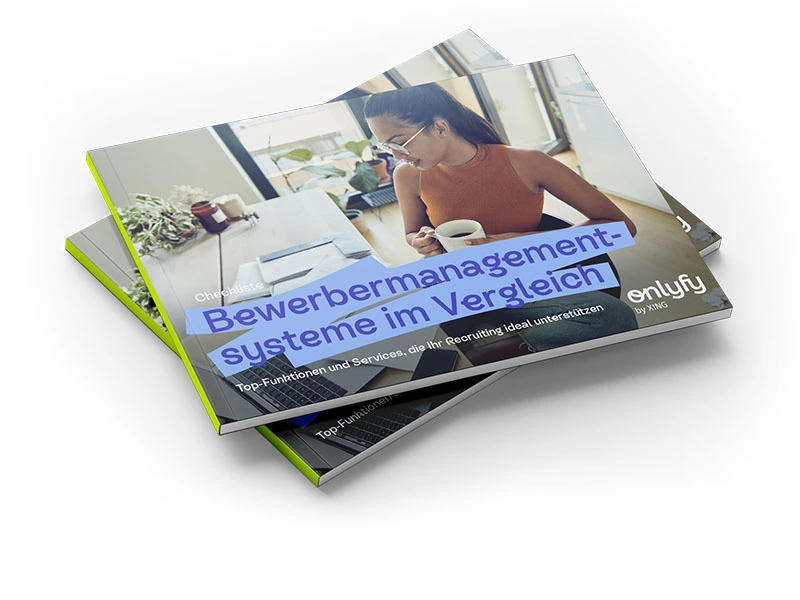
An Applicant Tracking System plays a central role in this process. It receives the transferred data, structures it, and makes it accessible to your recruiting team. Modern systems such as the onlyfy Bewerbungsmanager offer seamless integration with professional networks, enabling a particularly efficient flow of data.
The individual steps from the applicant’s perspective:
- Click on the job posting
- Automatic detection of existing profile data
- Brief review and, if necessary, supplementation of information
- Confirmation and submission of the application
For your recruiting team, this means: the application arrives in your system in a structured format and can be processed immediately. All relevant information is already available and does not need to be pieced together from various documents. This significantly accelerates the entire selection process.
The process becomes especially efficient when you use selection formats such as drop-downs or select fields instead of free-text fields. This makes applications easier to compare and simultaneously increases completion rates, as candidates find it easier to navigate the form.
What advantages does the one-click application offer companies?
Increased applicant numbers are the most obvious benefit. The low barrier to entry encourages more candidates to apply — particularly passive candidates who would drop out of more demanding processes. You thereby open up entirely new talent pools and reach people who would otherwise never have found their way into your applicant pipeline.
The candidate experience improves dramatically. Applicants appreciate the time saved and the straightforward process. This has a positive impact on your employer branding and generates favorable feedback, even from candidates who are not ultimately hired. A fast process that takes only a few minutes is very well received by target audiences.
For your recruiting team, the one-click application also delivers significant time savings. Data arrives in a structured format, so there is no need to sift through illegible PDFs or transfer information manually. This frees you up to focus on what truly matters: having meaningful conversations with promising candidates.
Conversion rates rise significantly. While traditional application forms often see abandonment rates of over 50 percent, optimized one-click processes can achieve completion rates well above 80 percent. Every click on your job posting is far more likely to result in an actual application.
This gives you a decisive competitive advantage in talent acquisition. In highly competitive markets, the company with the simplest application process often wins. You send a clear signal: we value our candidates‘ time and design our processes with them in mind.
To measure the efficiency of your recruiting processes, you should keep an eye on the relevant KPIs in recruiting. A dashboard in HR helps you monitor these metrics clearly and at a glance.
What are the challenges of implementing a one-click application?
Data quality can vary with one-click applications. Not all candidates maintain their profiles carefully, which can result in incomplete or outdated information. You therefore need to decide which information is truly essential and where you can follow up later in the process.
Technical integration requires careful planning. Your application system must be able to communicate with profile databases, and all interfaces must function smoothly. Allow sufficient time for testing before going live. Investing in a professional system pays off here.
A central challenge is striking the right balance between simplicity and the information you actually need. Less is more — but you still require certain basic data to make well-founded decisions. A candidate matrix can help you identify the criteria that truly matter.
Filter questions are a useful tool for capturing absolute knock-out criteria. If a candidate answers negatively, you can automatically send a rejection and focus your attention on the most promising applicants. This keeps the process efficient without forcing you to compromise on key qualification requirements.
Data protection compliance is, of course, non-negotiable. Make sure your solution is GDPR-compliant and that candidates are informed transparently about how their data will be used. Consent to data processing must be obtained clearly and in plain language.
Your internal recruiting processes may need to be adjusted. A CV-free or heavily simplified application process means shifting qualification questions into initial phone screenings. Define a clear set of questions in advance and use these conversations as an opportunity for a first impression of the candidate.
Crafting rejection messages becomes more challenging in a more personal application process. When you ask about preferences and working styles, there are no knock-out criteria in the traditional sense. This can occasionally lead to confusion among candidates who receive a rejection. Prepare your team for this and develop thoughtful, respectful rejection messages.
Keep costs in mind as well: an ATS with one-click functionality is an investment. However, when you weigh it against the time saved and the increase in applications, it quickly becomes clear that the expenditure is worthwhile.
The one-click application is not a universal solution for every position. It works best for roles where motivation and cultural fit are more important than specific educational credentials. For highly specialized expert positions, a more detailed application process may still make sense. Decide on a case-by-case basis where the simplified process delivers the greatest added value.