A recruiting tracker in Excel is a structured spreadsheet for managing applications and talent throughout the entire hiring process. It helps you collect all relevant information in one place, track progress, and keep important recruiting metrics in view. For smaller companies, Excel offers a cost-effective alternative to professional applicant management systems.
What Is a Recruiting Tracker and Why Do You Need One in Excel?
A recruiting tracker is a systematic solution for managing your entire application process. It documents all candidates, their status, and important dates in a clear, organized structure. This central data collection replaces the chaos of scattered emails, notes, and folders.
Excel is particularly well suited for smaller companies filling 10–30 positions per year. The advantages are obvious: low cost, ease of use, and flexibility for customization. No complex software rollout or training is required.
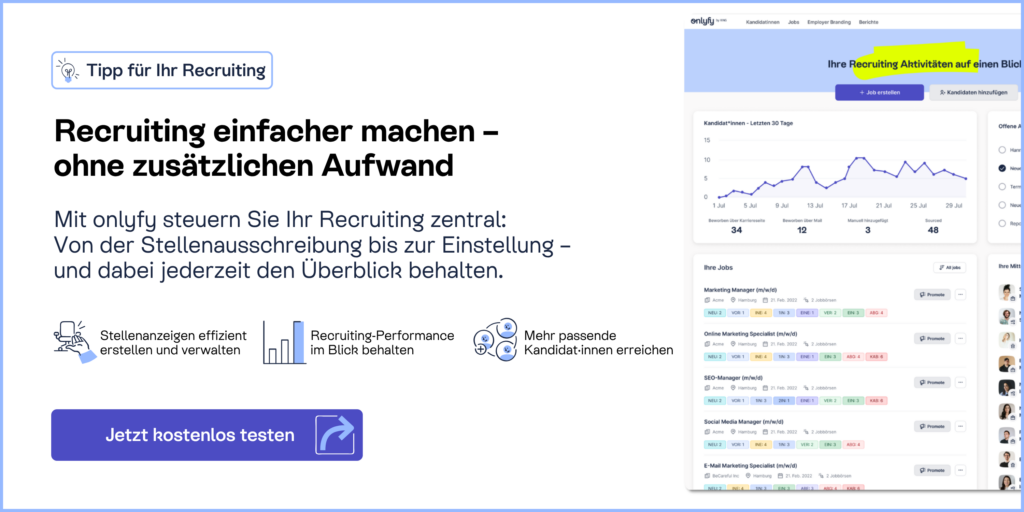
However, Excel quickly reaches its limits at higher recruiting volumes. Professional systems such as the onlyfy Bewerbungsmanager offer automated workflows, GDPR-compliant data management, and integrated communication. Excel is the right choice when you are just starting out with structured recruiting or have a very limited budget.
What Basic Columns and Data Belong in an Excel Recruiting Tracker?
A functional recruiting tracker requires essential data fields covering candidate information, job details, application status, and contact data. The optimal structure enables a quick overview and easy filtering by various criteria.
Basic candidate information:
- Name, email address, and phone number
- Application date and application source
- Position and job reference
- Current status in the application process
Process-relevant data:
- Application receipt and initial review
- Interview dates and conversation notes
- Evaluations and decision status
- Rejection or offer dates
This structure helps you maintain the optimal length of the application process and document every step in a traceable way.
How Do You Build a Functional Recruiting Tracker in Excel Step by Step?
The practical implementation starts with setting up a structured table with defined columns and formatting. Dropdown menus and conditional formatting make your tracker user-friendly and significantly reduce data entry errors.
Step 1: Create the basic table structure
Create a new Excel file with the following columns: candidate name, email, phone, position, application date, status, source, interview date, rating, and notes. Format the first row as a header with bold text and a background color.
Step 2: Set up dropdown menus
Use data validation for status fields. Create lists such as „Received,“ „Under Review,“ „Interview Scheduled,“ „Offer Made,“ or „Rejected.“ This ensures consistency and makes later evaluations much easier.
Step 3: Implement conditional formatting
Automatically color-code rows based on status. Use green for offers, red for rejections, and yellow for ongoing processes. This visual support significantly improves clarity at a glance.
Which Excel Formulas and Functions Optimize Your Recruiting Tracker?
Practical formulas automate calculations and generate meaningful analyses of your recruiting activities. VLOOKUP functions link data across sheets, while pivot tables enable complex analyses and create a Recruiting Performance Dashboard.
Key formulas for automatic calculations:
- DATEDIF function for time-to-hire calculations
- COUNTIF for status evaluations by category
- AVERAGE for mean process durations
- VLOOKUP for data matching between sheets
A Recruiting Dashboard is built using pivot tables that visualize your most important metrics. Create charts for application sources, success rates, and timelines. These analyses help you optimize your five steps in the hiring process.
Use conditional formatting with formulas to trigger automatic alerts for overdue deadlines or lengthy waiting periods. This way you never miss an important milestone in your application process.
How Do You Organize and Maintain Your Excel Recruiting Tracker Efficiently?
Efficient organization requires clear rules for data maintenance, regular backups, and structured team access. Consistent updates and a well-thought-out filing structure prevent data loss and clarity issues during long-term use.
Best practices for daily work:
- Define fixed times for data updates
- Use consistent spelling conventions and abbreviations
- Create weekly backups stored in multiple locations
- Document changes in a separate log sheet
For team access, save the file on a shared network drive or cloud storage. Define clear responsibilities: who is allowed to edit what? Avoid simultaneous editing by multiple people.
Keep in mind, however, the limitations of Excel: as your requirements grow, you should consider switching to a professional solution. Systems like the onlyfy Bewerbungsmanager offer significant advantages in applicant management through automation, GDPR compliance, and integrated communication.
An Excel recruiting tracker is a solid starting point for structured recruiting. It helps you standardize processes and capture key metrics. With the right formulas and a well-designed structure, you create transparency and improve your efficiency when selecting candidates. For growing companies with higher recruiting volumes, however, switching to a specialized applicant management system is strongly recommended.